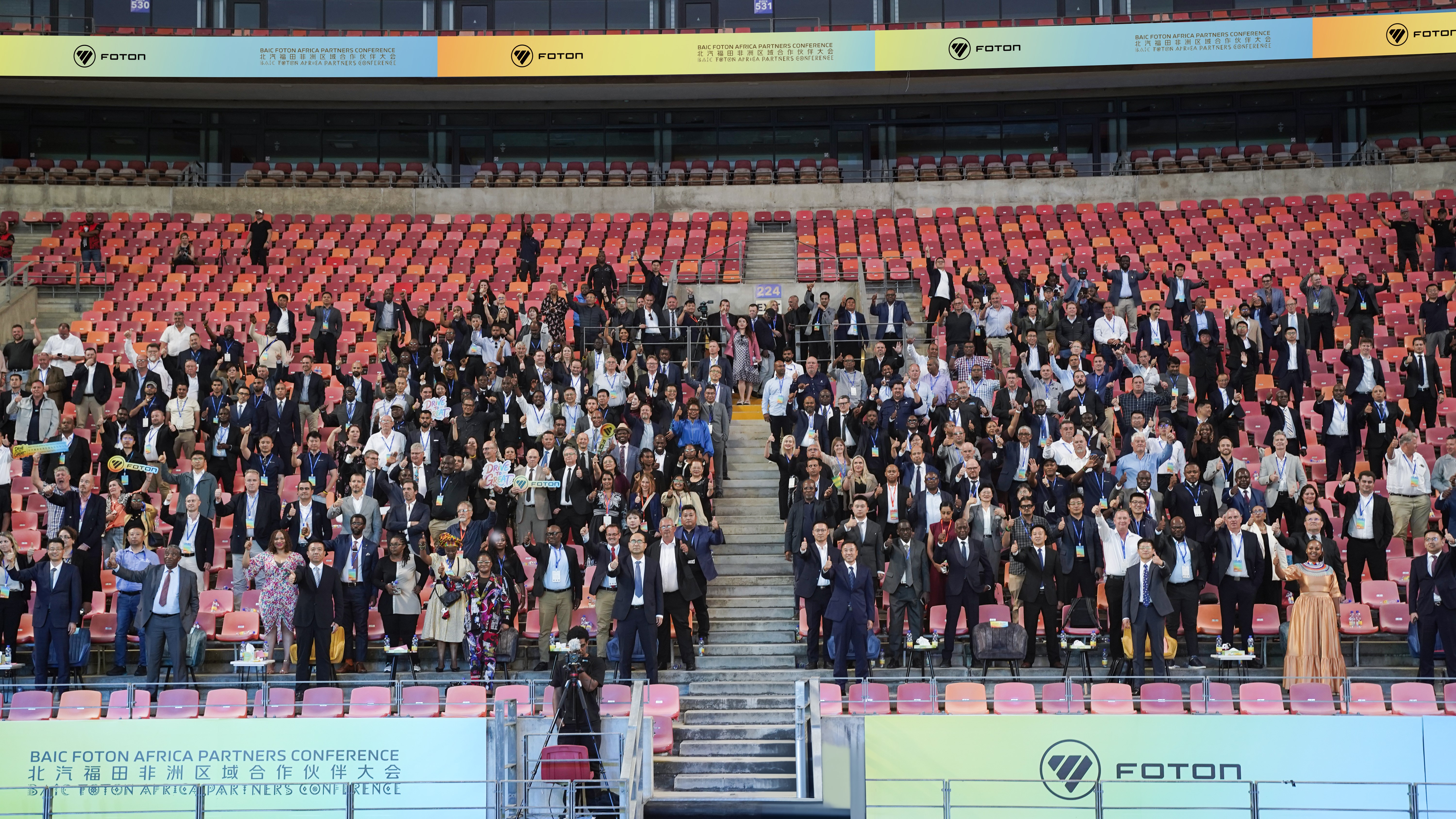
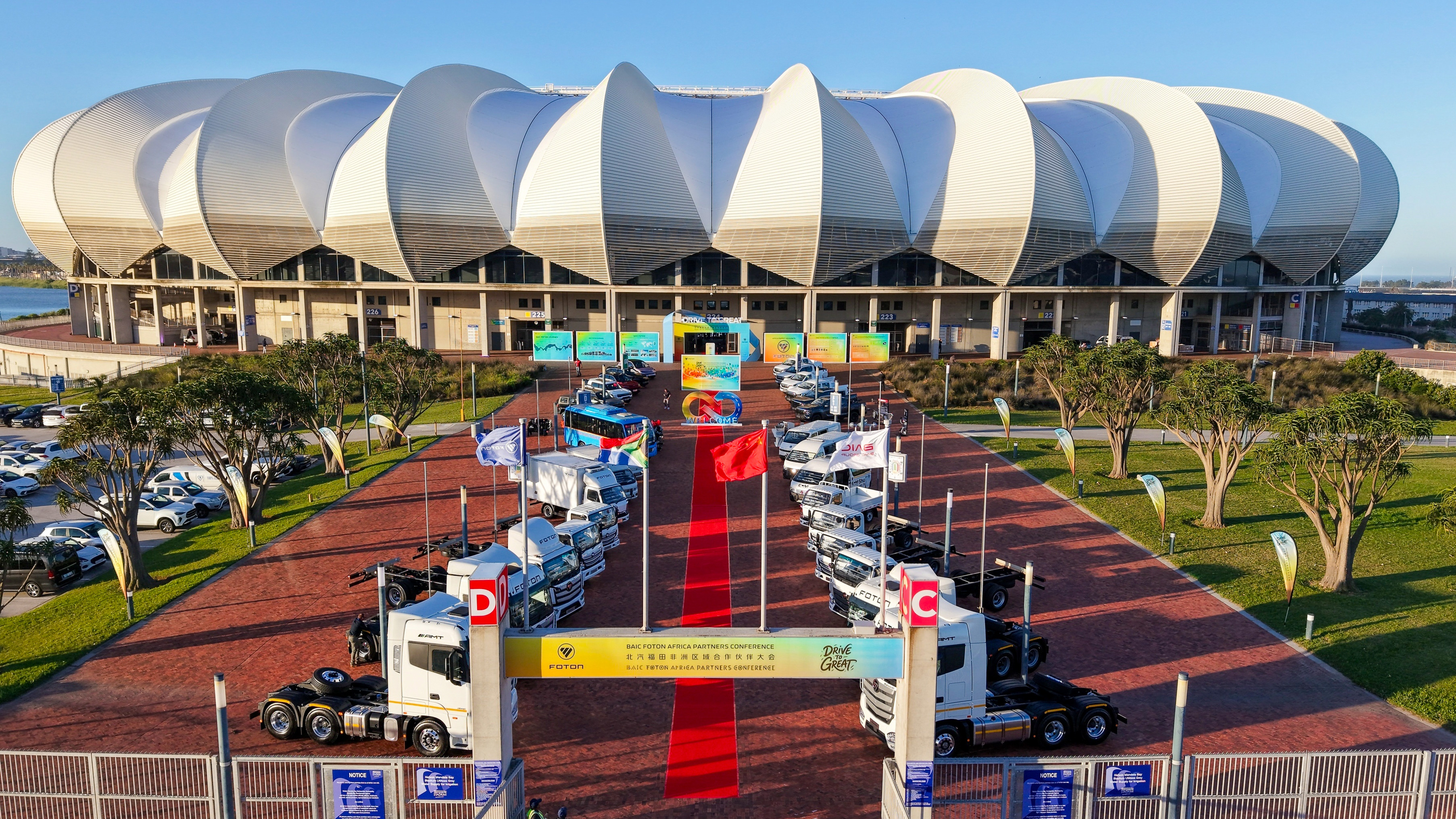
On October 29, the BAIC FOTON Africa Partners Conference, themed “Drive to Great,” was held in Port Elizabeth, South Africa, at the Nelson Mandela Bay Stadium, which hosted the 2010 FIFA World Cup. Nearly 700 participants attended, including representatives from Chinese and African political and business circles, senior executives from BAIC Group and BAIC FOTON, and distributors, key accounts, industrial partners, and media representatives from 42 African countries. The conference presented BAIC FOTON’s Africa strategy, product launches, localized manufacturing, and customer cooperation results, promoting deeper whole-value-chain collaboration between BAIC FOTON and African partners.
Strategic Anchoring in the African Market, Deeper Whole-Value-Chain Collaboration
BAIC FOTON has ranked first in China’s commercial vehicle sales for 21 consecutive years and first in exports for 15 consecutive years, with business covering more than 140 countries and regions worldwide. From January to September 2026, export sales exceeded 168,500 units, up 43.6% year on year, providing strong support for deepening its African market operations. In Africa, BAIC FOTON’s business covers 54 markets and has more than 300 authorized service outlets.
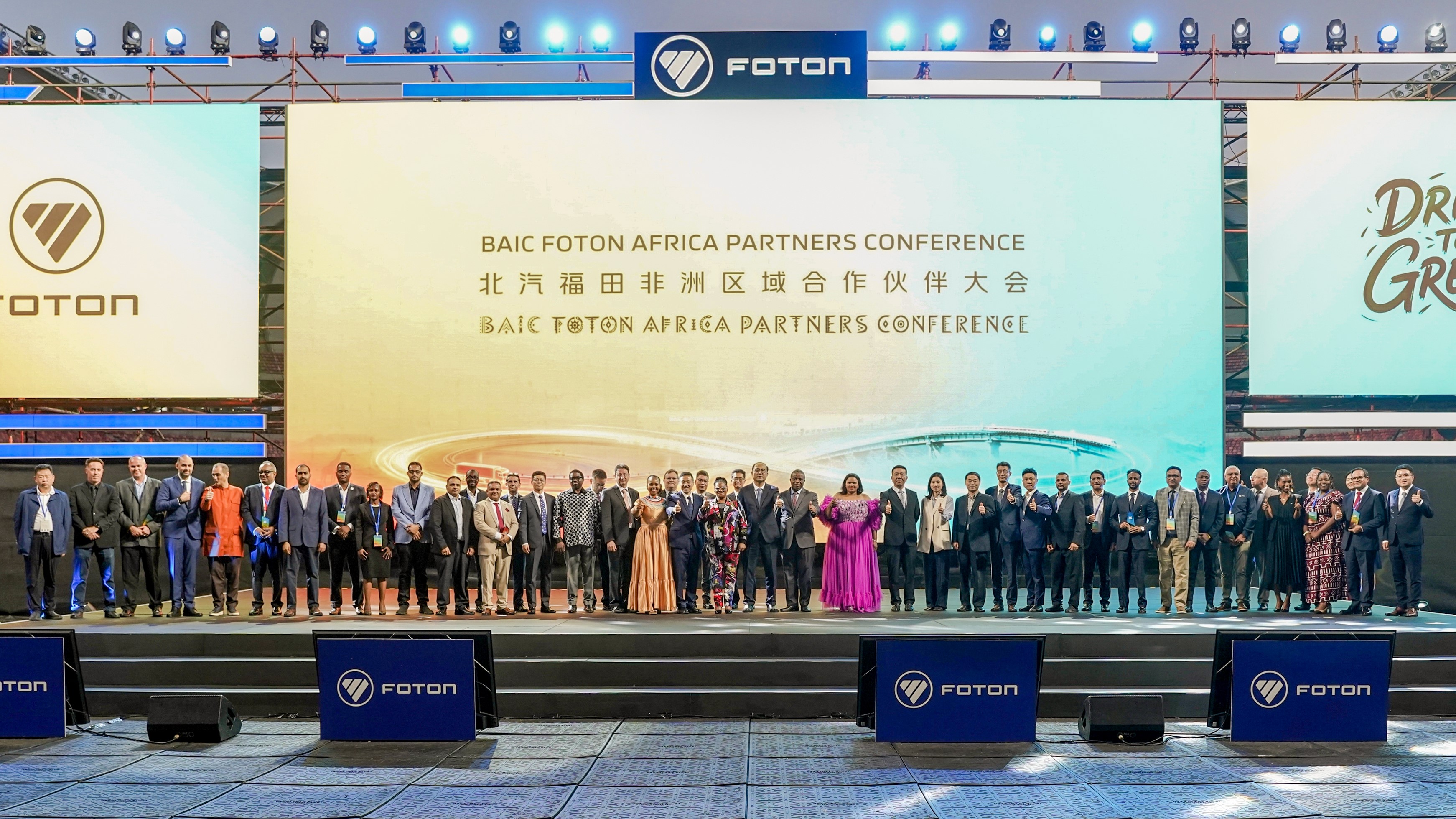
On the basis of existing markets, new progress was made in scaled operations in key markets during the conference. Chang Rui, CEO of BAIC Group and Chairman of the Board of BAIC FOTON, and customer representatives completed the delivery of 1,000 heavy trucks in Ghana and 800 heavy trucks in Zambia, continuously deepening scaled operations in key markets. Meanwhile, Wu Zongtian, President of BAIC FOTON International, and customer representatives signed agreements for new energy product projects: 200 units in Mozambique, 100 units in Ethiopia, 100 units in Kenya, and a batch project in Zambia, covering green transition scenarios in mining, agriculture, and other industries. This fully demonstrates FOTON’s competitiveness and customer recognition in Africa’s new energy commercial vehicle market.
The above deliveries and signings reflect customers’ recognition of BAIC FOTON’s products and services and demonstrate FOTON’s competitiveness in Africa’s new energy commercial vehicle market, providing a solid market foundation for deepening its Africa strategy.
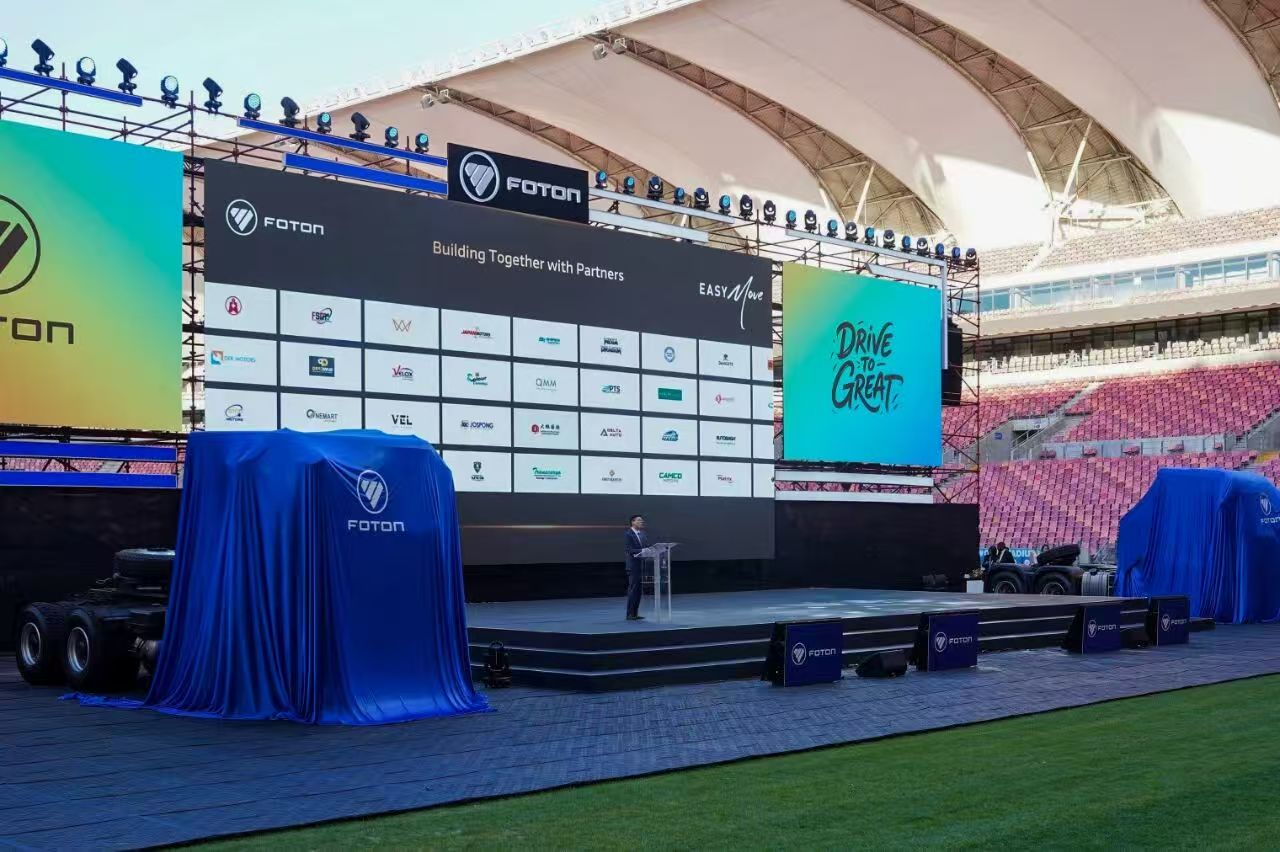
Looking to the next stage, Wu Zongtian released BAIC FOTON’s internationalization and Africa regional strategy report, proposing three pillars: localized product portfolio, localized business ecosystem, and localized manufacturing and operations, to deepen whole-value-chain collaboration with African partners. In line with transport conditions and energy conditions in African countries, BAIC FOTON will deploy multiple technology routes including fuel, natural gas, battery electric, and plug-in hybrid, using South Africa to activate growth in Southern Africa and drive coordinated breakthroughs in East Africa, North Africa, and West Africa, promoting quality improvement and volume growth in overseas business.
Product Matrix Expanded, Localized Manufacturing and Industrial Collaboration Advanced
At the product launch session, two heavy trucks, GALAXUS R5 and GALAXUS C5, were officially launched in Africa, and the TUNLAND V9 PHEV pickup was released for Africa, further expanding product supply in heavy-duty logistics and multi-purpose mobility. The GALAXUS R5 and GALAXUS C5 heavy trucks were developed for complex operating conditions in Africa, balancing power performance, reliability, and fuel economy, and are suitable for long-distance logistics and engineering construction scenarios. The TUNLAND PHEV pickup combines the advantages of fuel and electric drive, reducing energy consumption while ensuring range, and meeting multi-scenario vehicle needs in the African market. The concentrated appearance of the three products demonstrated BAIC FOTON’s technical accumulation in heavy trucks and pickups and its localized product development capabilities.
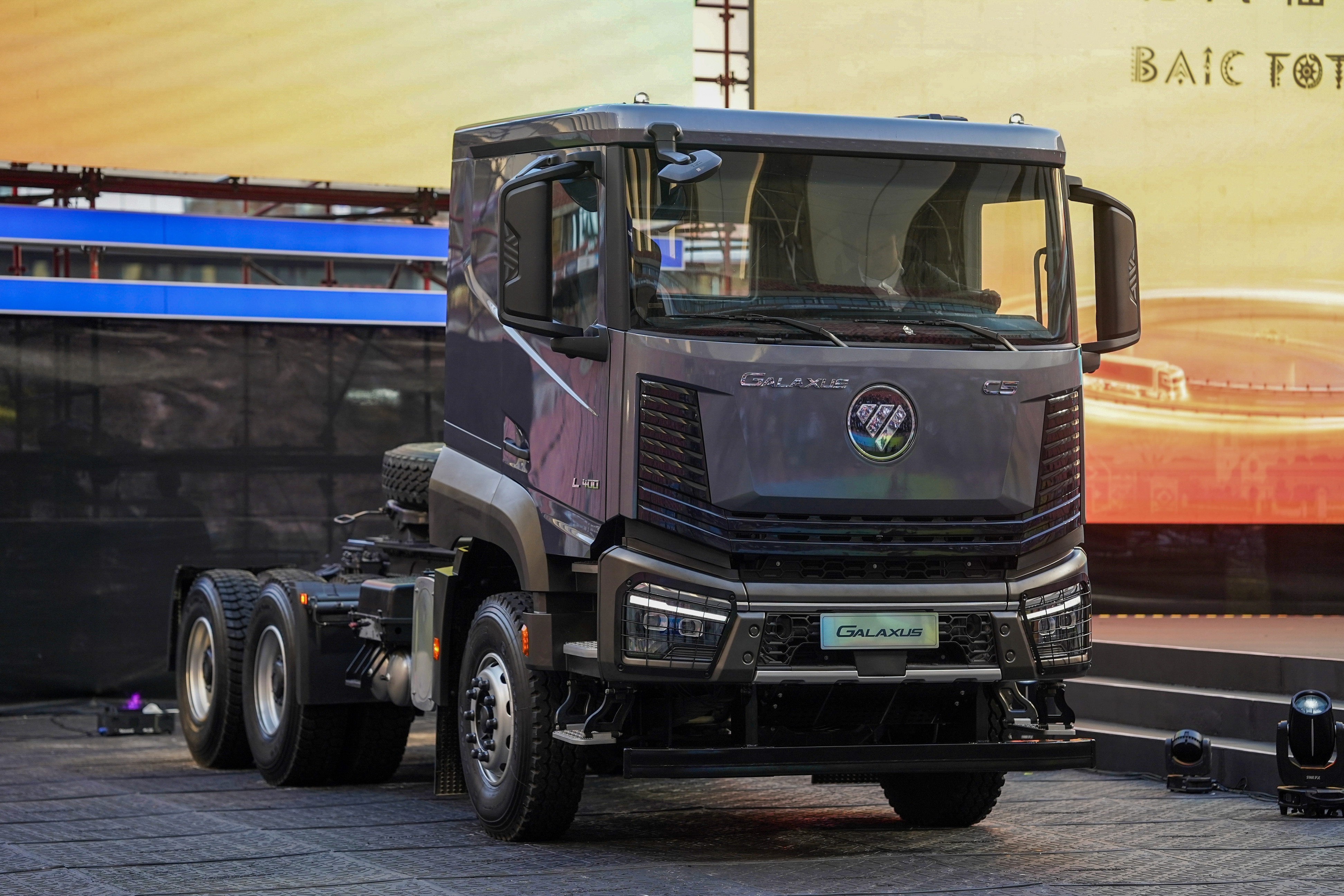
While expanding product supply, industrial collaboration was also carried out simultaneously. Relying on the regional layout of 16 localized factories in Africa, BAIC FOTON continued to expand manufacturing cooperation in multiple countries. At the strategic signing session, Dai Hongkai, Party Secretary of BAIC FOTON International, completed six localized manufacturing cooperation signings with partners in Tanzania, Kenya, and Zimbabwe; meanwhile, BAIC FOTON advanced vehicle purchase support cooperation with WesBank and an African parts center warehouse cooperation with DP World. Localized manufacturing, financial services, and parts support advanced together, pushing cooperation from vehicle trade to localized manufacturing and long-term operations, and providing full-chain support for African users to “buy with confidence and use with ease.”
Market Promotion Continued to Deepen, GALAXUS Sets Sail in Africa
The continued deepening of market promotion cannot be separated from partners’ collaborative efforts on the front lines of regional markets. The conference held a partners award ceremony, recognizing outstanding partners in key account development, new energy promotion, aftermarket services, distributor cooperation, and other areas, further building consensus among African partners for collaborative development.

As an important implementation action for market promotion, the launch ceremony for the Africa leg of the FOTON GALAXUS Global Experience was held. Luo Yunjie, VP of BAIC FOTON International, announced the official launch of the Africa leg of the FOTON GALAXUS Global Experience and presented flags to distributor representatives from Tanzania, the Democratic Republic of the Congo, Zambia, and Zimbabwe, marking that this activity will be carried out in relay in key African markets, further getting closer to regional customer needs and enhancing product experience and market awareness.
For the long-term development of the African market, BAIC FOTON will continue to join hands with local partners, deepen localized manufacturing and industrial collaboration, improve regional supply and operation service systems, and use products and services closer to local needs to help upgrade African transportation and industrial development, jointly embarking on the new journey of “Drive to Great.”